Direct answer: Yes, for most outdoor shooters, based on Cesare Ferrari’s field test. He calls the Freewell x Dunna Did It magnetic kit fast and practical. The slim ND4 to ND32 filters (2 to 5 stops) stacked on his 82mm ring with no visible vignetting at 15mm. The hard case survived a fall onto rocks, and the color shift he saw was slight and easy to fix in editing. He chose the Videography Kit and added the CPL, which is sold separately.
Video summary: what Cesare Ferrari shows
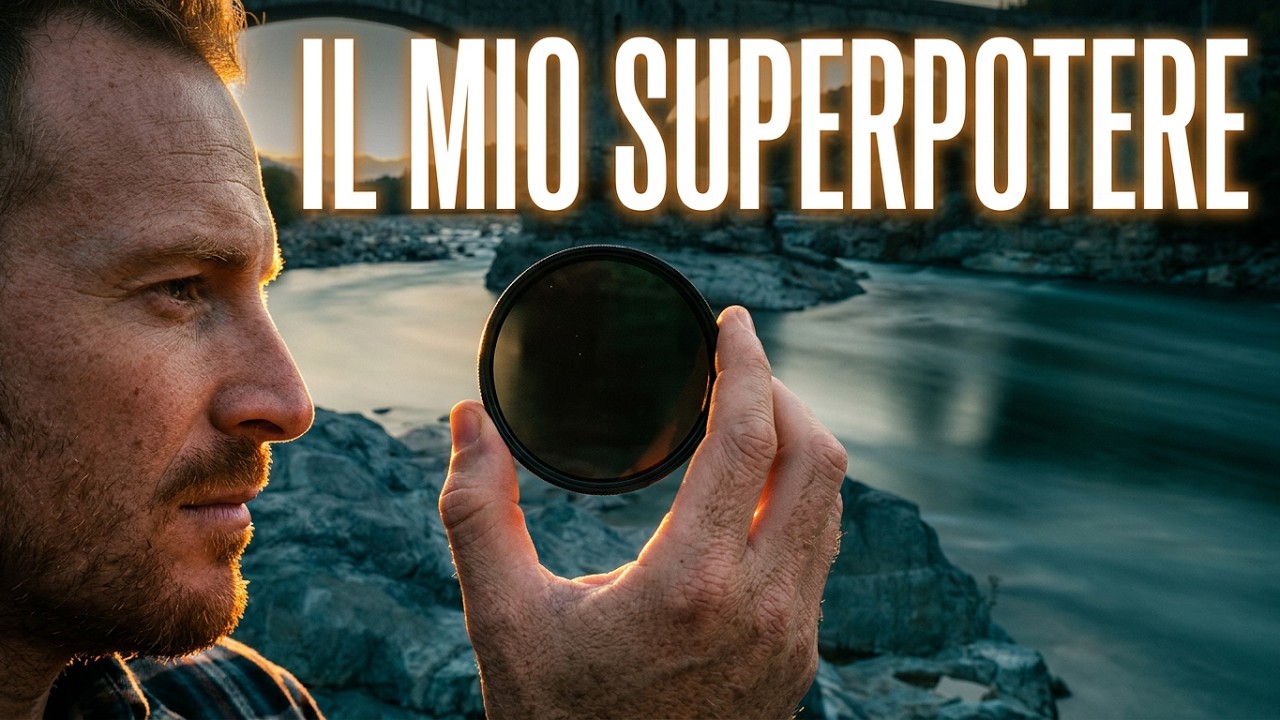
Cesare Ferrari, an Italian photographer and video creator, starts with the two complaints he hears most about filters: they are bulky, and screwing them on and off is a pain. He then takes the Freewell x Dunna Did It Ultra-Slim Locking Videography Kit (82mm) out to a river and bridge location to see if it fixes both. The video is in Italian. Our summary is based on the English caption track YouTube provides.
The hard case gets tested by accident. Cesare slipped on the rocks on the way to his spot, and the case flew out of his hand. It came away dented, and the filters inside were undamaged. The filters attach with magnets and lock with a twist, and the front cap doubles as a white, grey and black balance reference. The ND set covers 2, 3, 4 and 5 stops, and he stacked several of them for his long exposures.
His sample frames were shot at ISO 100, f/9 and 30 seconds, plus a 43-second bulb exposure that he timed on his wristwatch. Because the filters are 82mm and his lens is 82mm or smaller, stacking them did not cause vignetting, even at 15mm. He points out a minimal color variation: the center of the bridge looks slightly warmer than the cooler edges. He calls it slight and easy to correct in post, and says it is not distracting in the final image.
He did not use the polarizer on location. He had left it in the car, and he explains that a CPL at 15mm only clears reflections from part of an ultra-wide frame (at 35mm he would use one). Back in the studio he shows the CPL darkening a monitor and explains that it removes reflections from glass and water, but not from metal. He also uses the Glow Mist 1/4 on his own video camera to take the edge off very sharp mirrorless lenses for a softer, more cinematic look.
He closes with a few comparisons. There are separate Photography and Videography kits, and he picked the video one because of how its NDs are spread. This kit is thinner and quicker to use than the Freewell filters he reviewed a year or two ago. It has no variable ND, which he thinks is the right call, because stacking good fixed NDs usually beats a VND for image quality. He notes the metal frames are not featherweight, but he takes that as a sign of build quality.
Key takeaways
Key takeaways
- Built for speed. Magnetic attach plus a twist lock means no threads to fight when the light is changing.
- Stacking without vignetting. Using an 82mm ring on an 82mm-or-smaller lens kept the corners clean even at 15mm with several NDs stacked.
- Real long exposures. Stacked NDs got him to 30 seconds at ISO 100 and f/9 in daylight, and to 43 seconds in bulb mode.
- Small, honest caveat. He saw a minimal warm/cool color shift across the frame and says it is easy to fix in editing.
- CPL has limits at 15mm. On ultra-wide lenses a polarizer only clears part of the frame. He saves it for longer focal lengths, glass, and water.
- Fixed NDs over a VND. He prefers stacking ND4 to ND32 over a variable ND for quality, and notes the Glow Mist 1/4 is aimed at video.
Who this video is for
Watch this if you
- shoot landscapes or long exposures and are tired of screw-in filters
- shoot hybrid photo and video and want one compact kit
- are choosing between the Dunna Photography and Videography kits
Maybe skip it if you
- only want a single variable ND you can turn on the fly
- need a polarizer for ultra-wide shots (he explains the limits)
Timestamps
- 0:00 · Intro to filters and the Freewell kit
- 1:21 · Hard case and drop resistance
- 2:04 · Magnetic mount and compact size
- 3:01 · ND stops and no vignetting at 82mm
- 4:22 · Field test: long exposures, 30s vs 43s
- 5:43 · Color casts and the silky water look
- 7:16 · Why he skips the polarizer at 15mm
- 8:26 · Glow Mist 1/4 for a cinematic video look
- 9:11 · CPL studio test
- 10:46 · Portability and quick mounting
- 11:44 · Photo kit vs video kit
- 12:37 · Stacked fixed NDs vs variable ND, and conclusions
Freewell gear in the video
Frequently asked questions
Is the Freewell x Dunna Did It filter kit worth it for landscape photographers?
In Cesare Ferrari’s field test it was fast and practical. The magnetic twist-lock filters stacked for 30 and 43 second exposures, showed no vignetting at 15mm on an 82mm setup, and survived a fall in the hard case. He saw only a slight color variation that was easy to correct in post.
Does stacking Dunna Did It ND filters cause vignetting?
Not in his test. He used the 82mm version on an 82mm lens, so the filters were never narrower than the lens, and stacked several NDs at 15mm without visible vignetting. Using a ring size equal to or larger than your lens thread is the key.
Which Dunna Did It kit did Cesare Ferrari choose?
He chose the Videography Kit, which Freewell lists with ND4, ND8, ND16, ND32 and Glow Mist 1/4. The Photography Kit swaps in UV, ND64, ND1000, CPL and Glow Mist 1/8 for long-exposure stills. The CPL he demos was sent separately and is sold on its own for the video kit.
Why didn’t he use the polarizer on location?
He had left it in the car, and he also explains that at 15mm a polarizer only clears reflections from part of an ultra-wide frame. He says he would use a CPL at around 35mm, and he shows it in the studio cutting reflections from glass and a screen.
Is there a variable ND in this kit?
No. Cesare thinks that is the right choice, because stacking good fixed NDs (2 to 5 stops here) generally gives better image quality than a variable ND in most cases.
PakarPBN
A Private Blog Network (PBN) is a collection of websites that are controlled by a single individual or organization and used primarily to build backlinks to a “money site” in order to influence its ranking in search engines such as Google. The core idea behind a PBN is based on the importance of backlinks in Google’s ranking algorithm. Since Google views backlinks as signals of authority and trust, some website owners attempt to artificially create these signals through a controlled network of sites.
In a typical PBN setup, the owner acquires expired or aged domains that already have existing authority, backlinks, and history. These domains are rebuilt with new content and hosted separately, often using different IP addresses, hosting providers, themes, and ownership details to make them appear unrelated. Within the content published on these sites, links are strategically placed that point to the main website the owner wants to rank higher. By doing this, the owner attempts to pass link equity (also known as “link juice”) from the PBN sites to the target website.
The purpose of a PBN is to give the impression that the target website is naturally earning links from multiple independent sources. If done effectively, this can temporarily improve keyword rankings, increase organic visibility, and drive more traffic from search results.